Online presence and trust checks
Make the business look as credible online as it is offline.
Check what a stranger finds, strengthen trust signals and make public profile wording consistent across the web.
Email us about your next step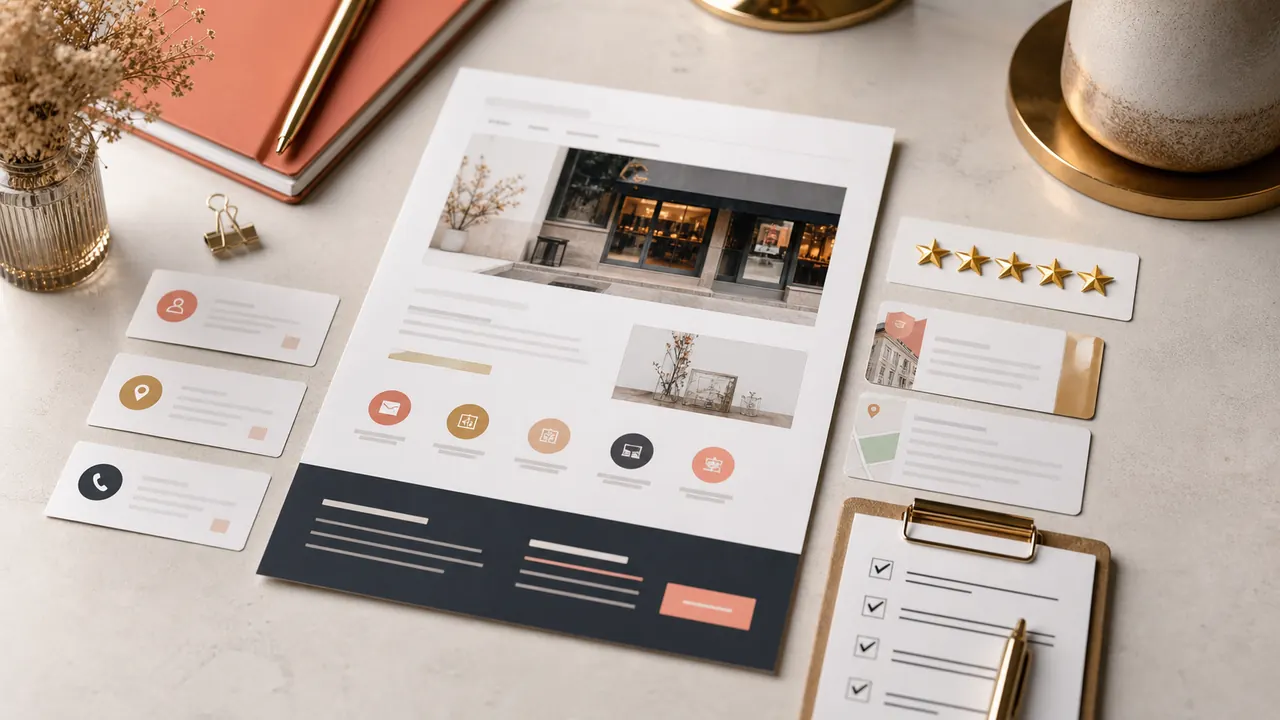
Online presence and trust checks
Check what a stranger finds, strengthen trust signals and make public profile wording consistent across the web.
Email us about your next step

A prospect may see a search result, social profile, directory entry and website before making contact. If each uses a different description, old hours or uncertain contact details, the business can feel less established than it is. We follow that outside-in journey and record what is clear, what conflicts and what is missing. The check concerns public presence and trust, not search positions. Every recommendation begins with accurate information supplied or confirmed by the owner.
Start with the trading name, then inspect the main result, website destination, contact details and prominent public profiles. Compare service wording and location information without assuming every old mention can be controlled. The walkthrough helps owners notice the questions an unfamiliar person would have: is this the right company, does it provide the needed service, is the information current, and is there a safe contact route? Observations become corrections rather than a score.

Identity covers the consistent business name and visual cues. Offer explains what the company actually provides in customer language. Contact confirms a reachable route and realistic service area. Reassurance includes legal information, current photographs, relevant policies and transparent expectations. These checks avoid relying on popularity claims. A smaller business can still look credible when its public details are coherent, specific and easy to verify across the places a prospect is likely to inspect.
The masonry gallery combines a tidy generic shop window, a softly obscured profile on a phone and existing planning imagery. Captions explain how each media item relates to recognition, profile clarity and the contact journey. The images do not identify customers or imply completed work. They prompt a practical content discussion: which real premises, people, process or work details could the business show appropriately, with permission, to help a stranger understand what exists behind the page.
We compare names, descriptions, service lists, geographic wording, opening information, email links, website destinations and policy references. Old public entries are categorised by importance and ability to correct. We also check whether the website gives enough substance to support shorter profile summaries. The output does not recommend filling every platform. It focuses effort on the sources customers actually encounter and on facts the team can keep current without creating an endless maintenance burden.
The pack can include a verified core description, short and long profile wording, a contact-detail sheet, a public-entry correction list and suggestions for appropriate trust material. Every sentence remains subject to owner confirmation. The source-of-truth approach prevents future updates from drifting: when a service or contact detail changes, the business knows which core wording and priority profiles need attention. This is useful operational housekeeping rather than a claim of public endorsement.
A generic profile might say that a company offers quality solutions. A clearer version names the kind of customer, the actual service, the genuine area and the preferred contact route. The adjacent sample is explicitly illustrative and uses no named organisation. It demonstrates sentence structure only. Real wording is created from verified facts and avoids unsupported superlatives, invented longevity or claims that cannot be evidenced. Clarity is more trustworthy than promotional fog.
We capture the current public journey, ask the owner to settle conflicting information and create a core fact sheet. High-visibility contact and identity errors come first. Profile wording and website alignment follow. Where an old entry cannot be changed directly, the limitation is recorded rather than concealed. At handover, the team receives the wording and correction list, plus a modest routine for checking important details after operational changes.
A business does not need to appear on every platform. It needs accurate information in the places prospects use. Generic stock imagery can support layout but should not masquerade as business evidence. Customer comments belong to the people who wrote them and are not reproduced without a proper basis. A public presence check can improve coherence and confidence, but the owner remains responsible for keeping changing facts current and approving all profile wording.
Explain what feels inconsistent or what customers commonly misunderstand. Do not send account passwords or private customer information. We will reply with the outside-in check that best fits the concern and the core facts needed to proceed. The purpose is simple: help a genuine business present the same clear identity, offer and contact route wherever a stranger first looks, without manufacturing proof or making claims the public information cannot support.